 lily
lilyStorm Rider: Legend of Hammerhead arrives with a familiar science-fiction setup: a damaged world, isolated communities, and a forbidden story that younger characters refuse to ignore. The film, originally developed under the title The Islander, places its action three hundred years after a flood reshapes human life. Islands replace nations, sea routes replace roads, and political control depends as much on fear as on geography. The premise offers strong material, yet the film often moves between effective visual ideas and uneven dramatic choices.
A future built on fragments of history
The story follows Neb, a young islander who grows uneasy with the strict order around him. Leaders in his community treat the past as dangerous territory. They allow daily survival, but they block questions about old legends. One of those legends centers on Hammerhead, a figure linked to rebellion and memory. The title also invokes the name Storm Rider, another symbol tied to stories that authority figures want erased.
Neb’s curiosity drives the first part of the film. He notices clues that suggest the official history may hide something larger. Once he starts connecting fragments from old maps, markings, and oral stories, the film moves into a travel narrative. He leaves familiar ground and begins searching across nearby islands. Maia joins him, and together they move through ruined spaces, guarded coastlines, and isolated settlements.

The strongest part of the screenplay appears here. The world opens gradually rather than through heavy explanation. Instead of long speeches, the film uses locations, abandoned objects, and short conversations to suggest how people rebuilt life after disaster.
Where the narrative succeeds and where it slows down
The early sections of Storm Rider: Legend of Hammerhead on Afdah2 create tension through uncertainty. Neb does not know whom to trust, and the audience learns at the same speed. That approach helps the first act feel active. However, once the journey begins, several scenes repeat the same dramatic pattern. The pair finds a clue, escapes danger, meets another person tied to old knowledge, and then moves again. While this structure keeps the story moving, it also reduces surprise after a while.
The film clearly wants the sea to feel dangerous, yet many travel scenes do not fully develop that threat. Storms appear, patrol boats appear, and warnings return often, but the danger sometimes feels visual rather than emotional because the script quickly shifts away before consequences deepen.
Another issue comes from pacing in Storm Rider: Legend of Hammerhead. Certain scenes suggest major discoveries, yet the emotional reaction remains brief. Neb often receives information that should change his thinking more deeply, but the film moves forward before those moments settle.
The political idea remains stronger than the action
The central political idea deserves attention. Leaders do not only rule through force; they shape memory. That concept gives the film more weight than a simple adventure plot. Hammerhead matters because his story challenges official order. The script suggests that history survives in fragments because ordinary people continue passing small truths forward.
This idea works best when older characters speak carefully about what they remember. In those scenes, the film gains seriousness. It stops behaving like a chase and starts acting like a story about inherited silence.
Performances and cast balance of Storm Rider: Legend of Hammerhead
Marco Ilsø as Neb
Marco Ilsø carries most of the narrative, and his performance stays controlled. He does not overplay Neb’s frustration, which helps the character remain believable. Viewers who know him from Vikings will notice a similar ability to hold tension without dramatic excess.
Still, Neb as written does not always receive enough internal conflict. The script gives him tasks, clues, and movement, but fewer scenes that reveal how fear or doubt shape him from within.
Sarah-Sofie Boussnina as Maia
Sarah-Sofie Boussnina gives Maia practical strength. She often grounds scenes that could drift into simple exposition. Maia asks direct questions, notices practical risks, and helps maintain realism during the journey.
However, the screenplay sometimes limits her emotional range by placing her mainly in reaction scenes. She often supports forward movement but receives fewer moments that belong fully to her own perspective.
James Cosmo and older cast presence
James Cosmo brings authority with little effort. His screen presence immediately adds depth because he carries history naturally in his voice and movement. Frances Tomelty and Caroline Goodall also strengthen scenes linked to political control and old power structures.
These older performers often make short scenes feel heavier than longer action sequences. Their experience helps the world feel older and more layered.
Production identity and visual choices
A European production with mixed influences in Storm Rider: Legend of Hammerhead
The film combines Croatian and wider European production elements. That blend appears in the cast, accents, and visual rhythm. Instead of following the bright pace common in large franchise science fiction, the film often prefers slower framing and colder textures.
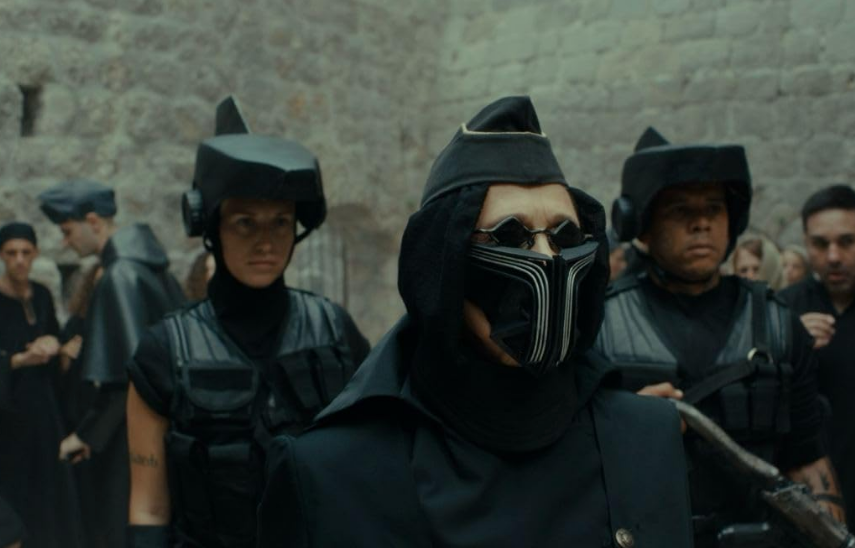
Its original title, The Islander, reflects the more personal side of the story. The newer title, Storm Rider: Legend of Hammerhead, sounds broader and clearly suggests franchise planning.
Visual atmosphere works better than scale
The strongest visual work appears in ruins, coastal cliffs, narrow shelters, and weathered interiors. These spaces support the idea that people rebuilt life from fragments.
The larger world, however, sometimes feels smaller than the script suggests. The film describes many islands and strong political systems, yet some scenes do not fully show that scale.
Limited interviews and public commentary from cast in Storm Rider: Legend of Hammerhead
At present, major cast interviews remain limited for the movie Storm Rider: Legend of Hammerhead. Public databases confirm production details and casting, but large magazine discussions with the full cast have not appeared widely yet. That matters because many online summaries already invent reactions or quotes that cannot be verified.
Without those interviews, the safest critical reading comes directly from the performances themselves rather than imagined production stories.
Final critical view
Storm Rider: Legend of Hammer on Afdah2 head presents a thoughtful premise and several strong visual ideas. Its interest in memory, silence, and controlled history gives it more depth than many simple future adventure films. Yet uneven pacing and repeated journey beats stop it from reaching full dramatic force.
The film works best when it trusts quiet tension, old voices, and political uncertainty. It weakens when action scenes repeat without adding emotional consequence. As an opening chapter, it offers enough material to invite further interest, but it leaves clear room for stronger character development if the story continues.