 lily
lilyWhy her latest performance arrived under a brighter spotlight than ever
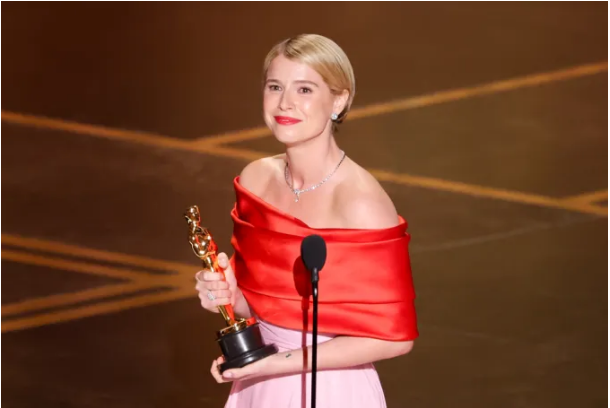
When Jessie Buckley walked onto the Oscar stage this month to accept Best Actress for her work in Hamnet, the award did more than confirm a long-building industry belief: she is now one of the most trusted actors of her generation. Her victory immediately changed the way audiences looked at The Bride!, because Maggie Gyllenhaal’s ambitious gothic reinvention had already reached cinemas carrying a very different kind of conversation — not whether Buckley was talented, but whether her talent could hold together a film built on deliberate excess.
That question matters because The Bride! on myflixer is not designed as a conventional prestige vehicle. It is restless, stylized, loud, and often deliberately unstable. Critics remain divided on the film itself, yet even mixed reviews repeatedly return to one conclusion: Buckley is the force that gives the film its pulse.
The Oscar therefore raises expectations not because audiences suddenly discovered her, but because it sharpens attention on how she works when the material becomes risky.
A performance built on instability rather than control
In The Bride!, Buckley does not play a single emotional line. She moves through multiple identities inside one character: first a woman grounded in the rough social world of 1930s Chicago, then a resurrected body carrying fragments of other voices, memories, and tonal registers. That shifting structure could easily collapse into gimmickry, yet Buckley treats each transition as if the character is physically discovering herself in real time.
One of the most discussed aspects of the performance is vocal transformation. Critics noted how she moves from a local streetwise rhythm into sharper literary cadences without making the shifts feel mechanical. Her voice becomes a dramatic instrument rather than a delivery tool. She does not simply speak differently from scene to scene; she lets speech reveal who currently controls the body.
That method explains why even viewers unconvinced by the film’s structure often still respond to her scenes. She makes contradiction readable.
Why Buckley’s acting style fits difficult material
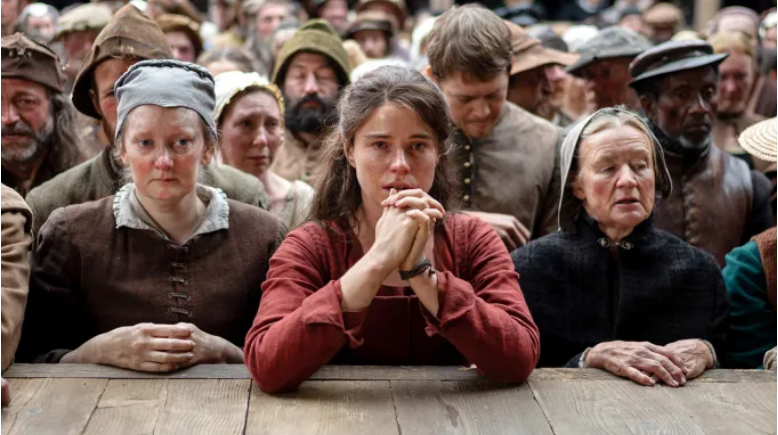
Buckley has built her career by avoiding polished predictability. In The Lost Daughter, she played emotional fracture through restraint. In I’m Thinking of Ending Things, she handled tonal shifts that would defeat many actors. In Hamnet, by contrast, she worked through grief with patience and silence, allowing physical stillness to carry meaning.
That range matters because The Bride! asks for all three instincts at once: theatricality, emotional fracture, and interior mystery.
Her Oscar-winning work in Hamnet depended on controlled grief — the kind of performance that invites viewers inward gradually. The Bride! asks for the opposite. It requires visible invention, abrupt turns, and a willingness to appear strange. That is where Buckley’s reputation becomes especially valuable: she rarely seems afraid of awkwardness on screen.
The result is a performance that remains coherent even when the film intentionally changes style around her.
The film around her is divisive — her performance is not
Maggie Gyllenhaal directs The Bride! as a collision of genres: gothic horror, gangster romance, feminist allegory, and studio-era homage. Some critics praised the ambition, while others argued the film overloads itself with too many ideas. Metacritic currently reflects that split with broadly mixed reviews, and Rotten Tomatoes shows a similar divide between admiration and frustration.
But Buckley repeatedly emerges as the one element most critics agree on.
The Guardian called her electrifying, especially in scenes where her body language becomes erratic without losing emotional intention. Time Out highlighted how she commits fully to the film’s wild tonal swings rather than trying to protect herself from them.
That full commitment matters. Many actors in ambitious but unstable films begin to signal distance, as if protecting their credibility. Buckley does the opposite. She behaves as though every extreme choice belongs naturally inside the world.
That confidence often determines whether strange cinema survives.
Does the Oscar change how audiences judge her here?
Yes — because awards alter audience expectation even when performances were completed long before voting finished.
After an Oscar win, viewers expect authority. They expect technical command, emotional intelligence, and a sense that every gesture has intention. In The Bride!, Buckley meets that expectation, but not in the familiar prestige way audiences may anticipate after Hamnet.
Instead of repeating solemn dramatic power, she offers volatility.
That may surprise viewers who know her only through quieter work. But it also explains why many critics argue that The Bride! demonstrates a different kind of bravery than Hamnet. In one film she proves emotional depth; in the other she proves she can remain fearless when tone becomes unstable.
That distinction is important because awards often reward contained excellence, while long careers are built on unpredictability.
Her chemistry with Christian Bale helps the film stay emotionally grounded
The film’s emotional center depends on whether Buckley and Bale can create tenderness inside a deliberately strange world.
Bale plays Frankenstein’s creature with restraint, which gives Buckley more room to move unpredictably. Their scenes work because neither actor competes for theatrical dominance. Instead, Buckley generates movement while Bale absorbs it.
That contrast gives several scenes unexpected softness. Even when the script leans toward spectacle, the emotional exchange between them prevents the film from becoming purely decorative.
Critics repeatedly singled out that pairing as one reason the film remains watchable even when narrative focus weakens.
So, did the Oscar raise expectations — and were they justified?
Yes, but not because The Bride! on myflix is a flawless follow-up.
The expectation was that Jessie Buckley would deliver something fully inhabited, technically daring, and difficult to ignore. She does exactly that.
The film itself remains divisive because its ideas sometimes outrun its structure. But Buckley’s performance justifies the heightened attention created by the Oscar because she never treats the role like an awards aftershock or a prestige extension. She attacks it as a separate challenge.
That may be the clearest sign of why the Oscar arrived now: she does not repeat herself, even when repeating success would be easier.